Layer Man 3D: Run & Collect
- 4.3
- Rating
- 10.00M
- Installs
- Free
- Price

 Analysis by App-foxy
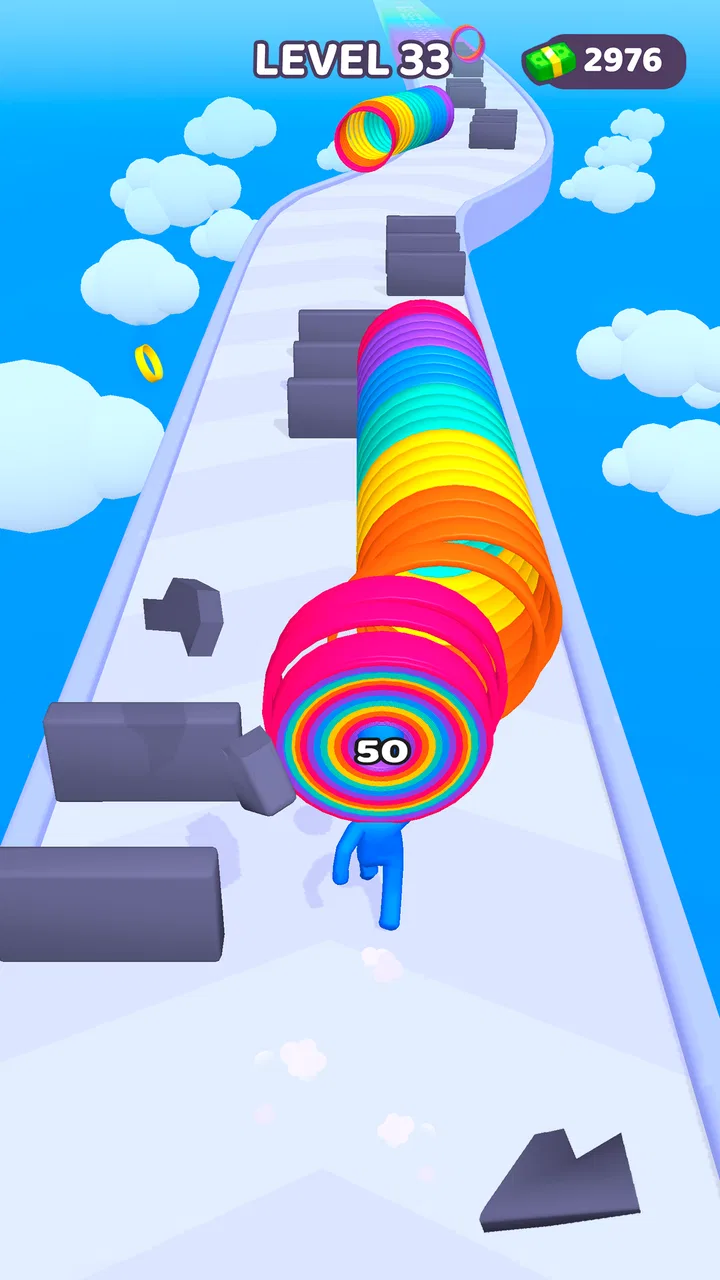
I spent time with Layer Man 3D: Run & Collect as a quick arcade game built around one clear idea: run forward, gather layers, and try to make a huge slinky-like character capable of overcoming the giant at the end of a stage. It is easy to understand within seconds, which is exactly why it works well for short sessions. You do not need a long tutorial or previous experience with arcade games to begin.
That simplicity is also the key to judging it fairly. This is not trying to be a deep action game, a story-driven adventure, or a demanding competitive title. It is a lightweight obstacle-and-collection experience from CASUAL AZUR GAMES, aimed at players who enjoy immediate movement, visible growth, and a clear finish-line objective. I found it most enjoyable when I treated each run as a compact challenge rather than expecting a large progression system.
How the running and collecting loop feels
The central rhythm is straightforward: guide the character along the route, collect useful layers, avoid mistakes, and arrive with enough size or strength to deal with the final giant. The visual change in the character gives every pickup an obvious purpose. Instead of collecting items that only affect an unseen score, you can see the result building during the run.
You May Also Like

 Blood Strike: 2.5 Anniversary
Blood Strike’s Loadouts Turn Every Drop Into a Tactical Gamble
A close look at Blood Strike’s custom loadouts: how fast access to signature weapons reshapes its battle royale rhythm, rewards preparation, and narrows the gap between fights.

 Pandora - Music & Podcasts
Pandora’s Music Is Easy to Start, but Harder to Recover
Pandora’s strength is its low-effort path from a seed to a station. Its weak spot is how much confidence it asks you to place in connection, setup, and quiet recovery.

 8 Ball Pool
 Is Built on Rivalries, Rematches, and Routine
A close look at the rivalries, rematches, shared routines, and unanswered safety questions that turn a quick pool match into a persistent mobile community.

 Samsung Music
’s Quiet Strength Is Playing What You Already Own
Its reach comes less from spectacle than from dependable access to a personal library. That simplicity is both the app’s strongest retention engine and its ceiling.

 AccuWeather: Weather Radar
AccuWeather Review: A Quick, Clear Forecast for Everyday Decisions
For everyday plans, the best forecast is the one you can understand quickly. AccuWeather makes rain timing, radar, and local conditions easy to act on, with a few trade-offs.

 Hill Climb Racing
Why Hill Climb Racing Still Turns Crashes Into One More Run
A tiny car, a bumpy hill and one more upgrade: Hill Climb Racing keeps resurfacing because its simple chaos makes every near-miss feel personal.
More From Our News Desk



That visual feedback makes the game approachable for younger players and for anyone who prefers arcade controls without complicated combinations. The Everyone age rating also fits that accessible presentation. A child can understand the basic goal quickly, while an adult can pick it up for a few minutes while waiting for a bus or taking a short break.
My first useful tip is to avoid thinking of every collectible as an automatic win. The route is more interesting when I look ahead and decide which path is likely to preserve the growing stack. A tempting pickup is not always worth taking if reaching it creates a poor approach to the next section. The game’s appeal comes from making those small decisions quickly, not from simply holding a direction and ignoring the course.
The finish-line confrontation gives the run a satisfying reason to exist. Without that final test, collecting layers would feel like filling a meter for its own sake. Here, the growing slinky-like form is tied to a visible opponent, so I always have a simple question in mind: have I built enough before the encounter?
At the same time, the concept has a natural limit. Once the novelty of growing the character wears off, the enjoyment depends heavily on how much variety the individual stages provide. Players who need complex enemy behavior, precise platforming, or a strong narrative may find the loop too narrow. I would not choose this over a traditional platform game when I want exploration or mastery of advanced controls.
Why the simple design suits short sessions
One strength I noticed is how little preparation each attempt requires. There is no need to remember a complicated control layout or study a large map. I can open the game, understand the immediate objective, and make progress through a handful of decisions. That makes it a good fit for short, interrupted play.
A realistic everyday use case is a ten-minute break during a busy day. I can play a run, put the phone down without needing to preserve a long story sequence, and return later without feeling lost. It also works as a casual handoff game for family members because the premise is visual and the objective is easy to explain.
There is a trade-off here. The same clarity that makes the game welcoming can make it feel repetitive for players who want layered systems. I would recommend it to someone who enjoys quick arcade rounds, but I would steer a strategy fan toward a game with deeper planning, and a reflex-game specialist toward something built around more demanding timing.
Progress, pressure, and the cost of a mistake
The pressure in each run comes from balancing growth against safe movement. The character’s size is not just decoration; it represents the preparation for the giant encounter. That creates a mild form of tension even when the controls remain simple. A mistake can matter because it may reduce the strength you carry toward the end rather than merely interrupting the scenery.
I found it helpful to divide a stage mentally into three moments. Early on, I focus on establishing a good collection rhythm instead of chasing every possible layer. In the middle, I pay more attention to route choices and whether a risky pickup will leave me badly positioned. Near the end, I stop experimenting and protect what I have built. This approach is more reliable than playing the entire course with the same aggressive attitude.
That is one of the game’s less obvious lessons: the best run is not always the one with the most movement or the most daring line. Sometimes restraint is the better choice. If the final giant is the important test, preserving a healthy stack can matter more than making a flashy detour. The game does not need a complicated upgrade tree to create that small but meaningful decision.
Players should also understand what kind of progress they are getting. The satisfaction is primarily run-based and visual: collect, grow, reach the confrontation, and try to improve the next attempt. Anyone expecting a long-term role-playing progression system, a detailed character build, or a large equipment economy should adjust expectations before installing it.
The current version is 2.3.0.6, and the game supports devices running Android 7.0 or later. Those details make it practical for people using older compatible Android phones, although the actual experience can still depend on the device and its performance. I would check that the phone has enough free space and that the operating system meets the requirement before planning to play regularly.
Spending without guessing beyond the facts
The game is free to install, which makes trying the core idea low-risk. It includes in-app purchases listed at $3.99 per item. That is the part I would keep in mind before handing the phone to a child or allowing purchases on a shared device. A free download does not automatically mean that every part of the experience is free of spending prompts.
I want to be precise about fairness: the purchase information establishes the price per item, but it does not by itself explain what each purchase provides or whether it changes competitive outcomes. I would not claim that purchases are necessary, nor would I claim that they are purely cosmetic. The sensible approach is to review each purchase prompt carefully and use device-level purchase controls if someone else will be playing.
For my own recommendation, the free entry point is the main attraction. I would first play enough to decide whether the running-and-collecting loop holds my attention before spending anything. If the basic movement already feels repetitive, buying an item is unlikely to solve the underlying mismatch between the game and my taste. Spending makes more sense only when I already enjoy the core runs and understand what I am buying.
This is also where the game differs from a premium arcade title. A paid game with no purchase prompts may feel cleaner for someone who wants a single upfront transaction. On the other hand, a free game is easier to sample casually. The better choice depends on whether I value a no-cost trial or a more predictable purchase model.
Fairness when there is no need to compete with strangers
The game’s main contest appears to be between my current run and the giant waiting at the end, rather than a traditional player-versus-player match. That changes how I judge fairness. I am less concerned about ranking advantages and more concerned with whether the route gives me a readable opportunity to recover from mistakes and understand why a run failed.
For a casual arcade experience, a fair-feeling challenge should let the player connect decisions with outcomes. If I lose because I ignored a dangerous route, that feels different from losing without understanding what happened. My preferred way to play is to treat failed attempts as information: notice where the stack was weakened, then change the next route choice rather than repeating the same movement.
I would not describe this as a competitive substitute for a multiplayer arcade game. Someone searching for leaderboards, direct rivalry, or a skill system designed around equal online matches should choose another category of title. Layer Man 3D is better understood as a personal score-and-finish challenge, where the pressure comes from the course and the giant rather than from another human player.
That distinction matters for families too. The straightforward objective can make it comfortable for a child to play without the social pressure associated with online competition. Still, parents should remember that the game is free with $3.99 purchases per item, so gameplay simplicity and spending control are separate issues.
What I would check before committing to regular play
There are a few practical questions I would answer through actual use rather than assumptions. First, I would see whether the stage rhythm remains enjoyable after the initial novelty of the expanding character fades. The concept is immediately clear, but long-term appeal depends on whether the routes continue to make me think about collection and risk.
Second, I would pay attention to how interruptions affect my session. This is a game I naturally approach in short bursts, so it should fit the way I use my phone. If I need a calm, low-commitment diversion, it is a reasonable candidate. If I want a long uninterrupted session with substantial story or exploration, it is not the right tool.
Third, I would inspect every purchase screen before approving anything. The known price is $3.99 per item, but the value of an item depends on its specific purpose in the game. I would not buy simply because a prompt appears during a difficult run. Waiting until I understand the normal gameplay gives me a better basis for deciding.
Finally, I would consider the device requirement. Android 7.0 or later is the stated minimum, so older phones below that threshold are not suitable. For compatible devices, the game’s simple arcade presentation should make it approachable, but I would still avoid judging performance on one phone as a guarantee for every other model.
Who should play it, and who should skip it
I think it is a good match for players who like quick arcade games with a strong visual payoff. If you enjoy watching a small character become increasingly large, making route choices under light pressure, and reaching a clear opponent at the end, the premise has enough personality to be worth trying. It is especially suitable for casual sessions rather than marathon play.
It can also work for younger players because the objective is easy to explain and the content rating is Everyone. I would still supervise purchases on a shared device, not because the game is difficult to understand, but because free-to-install games with paid items deserve the same spending boundaries as any other app.
I would skip it if I want a demanding arcade test built around precise timing, a competitive multiplayer ladder, or extensive customization. I would also skip it if repeated collection runs quickly bore me. A more traditional platformer is a better choice for exploration, while a premium arcade game may be preferable for someone who dislikes in-app purchase prompts altogether.
Its audience is therefore fairly specific, and that is not a weakness by itself. The mistake would be expecting it to serve every kind of mobile player. As a focused, accessible running game, it knows what its central attraction is. Whether that attraction lasts depends on how much pleasure I get from refining small route decisions.
My trust verdict after weighing the whole package
Layer Man 3D: Run & Collect has reached a broad audience, with over ten million installs and a 4.3 average from around seventeen thousand ratings. Those figures suggest that the simple arcade formula has found plenty of players, but they do not replace personal testing. I still judge it by whether the collection loop feels satisfying after the first few runs and whether the purchase model fits my expectations.
My verdict is cautiously positive. I like the immediate premise, the visible growth of the character, and the way the giant gives each run a clear purpose. The game is easy to recommend as a free experiment for someone who wants a short arcade distraction. I would not present it as a deep or endlessly varied experience, and I would not make claims about the role of purchases beyond the listed $3.99 price per item.
The developer, CASUAL AZUR GAMES, has placed the game in a familiar mobile arcade space, but the slinky-layer idea gives it a memorable visual hook. My best advice is to play conservatively near the end of a run, compare risky collection choices instead of grabbing everything automatically, and decide about purchases only after understanding their exact value in context.
My recommendation: try it if you want a free, approachable arcade game for short sessions, but keep your expectations focused on quick runs and simple decisions. It is not the right choice for deep progression or serious competition, yet for a player who enjoys building momentum toward a playful final challenge, it can be an enjoyable little time-filler.
FAQs for Layer Man 3D: Run & Collect
01What is the main objective of Layer Man 3D: Run & Collect?
Layer Man 3D: Run & Collect is a fast-paced arcade game where the primary goal is to navigate through various obstacles while collecting layers along the way. Players must strategically maneuver to gather as many layers as possible, which helps enhance their character's abilities and reach higher scores. The game combines elements of strategy and quick reflexes to provide an engaging experience.
02Is Layer Man 3D: Run & Collect free to play?
Yes, Layer Man 3D: Run & Collect is free to download and play on both Android and iOS platforms. However, the game may offer in-app purchases that can enhance the gaming experience by providing additional features, power-ups, or cosmetic items. Players can enjoy the game without making purchases, but these options are available for those who wish to advance more quickly.
03What are the system requirements for Layer Man 3D: Run & Collect?
For Android devices, Layer Man 3D: Run & Collect requires Android version 5.0 and up. For iOS, the game requires iOS 10.0 or later. The app is optimized for performance on most modern smartphones and tablets. Ensure you have adequate storage space and a stable internet connection for the best gaming experience.
04Does Layer Man 3D: Run & Collect offer multiplayer features?
As of the latest version, Layer Man 3D: Run & Collect is primarily a single-player game focusing on individual skill and progression. While it does not feature direct multiplayer modes, players can compete against friends or global players through leaderboards, fostering a competitive environment to achieve the highest scores.
05Are there any tips to progress faster in Layer Man 3D: Run & Collect?
To progress faster in Layer Man 3D: Run & Collect, focus on mastering the controls and timing your movements to avoid obstacles efficiently. Prioritize collecting layers that enhance your character's abilities and look for opportunities to utilize power-ups strategically. Regularly check for updates, as developers may introduce new features or challenges to keep the gameplay fresh.
Pros
- Engaging graphics with vibrant colors.
- Simple controls for a smooth experience.
- Unique gameplay mechanics
- very addictive.
- Levels offer increasing challenges.
- Quick load times enhance playability.
Cons
- Repetitive levels can become monotonous.
- Ads can disrupt gameplay experience.
- In-app purchases pressure players.
- Limited character customization options.
- Occasional bugs affect performance.

Layer Man 3D: Run & Collect
Gallery